Jason Dale: A Life of Service
25 years protecting and guiding Orange County communities
Meet Jason Dale
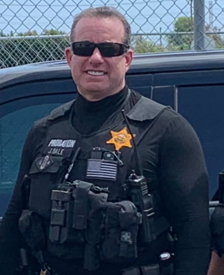

Jason Dale is a retired Deputy Probation Officer with the Orange County Probation Department, concluding a distinguished 25-year career devoted to public safety, rehabilitation, and professional development. His final assignment was in the Sex Crimes Unit, where he applied the Containment Model, integrating intensive supervision, specialized treatment, and polygraph assessment, to reduce recidivism and enhance community protection.
Over his career, Mr. Dale supervised high-risk domestic violence, child, and elder abuse cases, and served in the Gang Unit, Adult and Juvenile Supervision, and Placement.
A Criminal Justice Ph.D. candidate, Jason has also served as a lecturer at Cal State Fullerton and Cal State Long Beach, teaching courses in Trauma and Stress Practices in Corrections, Cultural Diversity, Implicit Bias, Domestic Violence, and Supervisor Core. As an STC instructor, he helped train more than 1,100 probation staff in Trauma-Informed Care and mentored college interns for over 15 years, preparing future leaders in the field.
Jason Dale’s 25-year career reflects a steadfast commitment to ethical supervision, education, and the advancement of evidence-based correctional practices.
Jason’s insights into rehabilitation truly changed how I view community safety.
Classes Offered
Guidance rooted in 25 years of probation experience.
Bias, Equity, and Equality in Community Corrections (DEI in Probation Systems)
This course confronts how implicit bias, structural inequality, and decision-making shortcuts shape outcomes in community corrections. Officers analyze real cases, practice bias-interruption strategies, and leave with concrete tools to enhance fairness, consistency, and trust with clients, employees, and the broader community.
Burnout Prevention: High-Risk Sex Offender Caseloads
High-risk sex offender caseloads are uniquely draining—emotionally, mentally, and morally. This course provides officers with practical tools to recognize early signs of burnout, set healthy boundaries, process secondary trauma, and sustain their performance over the long haul without compromising their humanity or professionalism.
Cell Phones: Digital Evidence Searching to Increase Supervision Effectiveness
This course teaches officers how to lawfully, safely, and effectively search cell phones for evidence related to supervision. Participants review legal authority, policy constraints, documentation requirements, and a 10-Minute iPhone Triage checklist that prioritizes high-yield apps, hidden folders, financial platforms, and communication channels, integrating digital searches into supervision while minimizing liability.
Commercial Sexual Exploitation of Children (CSEC) and Human Trafficking Awareness and Supervision Strategies for Officers
Officers learn how traffickers recruit, groom, and control victims and how those dynamics show up on caseloads. The course covers red flags, trauma-informed interviewing, safety planning, and supervision strategies that disrupt exploitation while protecting victims and holding offenders accountable.
Compliance Checks: Safety and Search Tactics for Safe Outcomes
This course sharpens officers' skills for conducting safe and legally defensible field and home compliance checks. Participants practice pre-planning, role assignment, approach tactics, search sequencing, and de-escalation skills designed to reduce the use of force, enhance officer safety, and improve evidentiary outcomes.
Comprehensive Search Skills for Probation: Law, Safety, and Tactics
From initial knock to final documentation, this course walks officers through the entire search process. Officers review controlling case law, policy requirements, tactical movement, team communication, and post-search documentation so that every search is safe, purposeful, and defensible.
Credible Courtroom Testimony for Probation and Corrections Staff
Officers learn how to testify like professionals, not just witnesses who “show up.” This course covers report preparation, direct and cross-examination, handling aggressive questioning, and avoiding credibility traps, enabling officers to present clear, confident, and defensible testimony that withstands scrutiny.
Criminal Street Gangs: Why They Join – A Psychological and Sociological Approach to Understanding
Rather than only focusing on gang labels, this course examines the “why” behind gang involvement. Officers explore identity, trauma, family systems, social status, and neighborhood dynamics, then apply this understanding to assessments, supervision strategies, and gang-desistance interventions.
Defensible Court Report Writing for Probation Officers
This course transforms court reports into professional risk-communication tools, rather than relying on narrative guesswork. Officers practice writing clear, structured, evidence-based reports that communicate risk, needs, progress, and recommendations in a way that is objective, concise, and defensible in court.
Developing the Balanced Officer: Professionalism, Ethics, and Performance
Officers explore how professionalism, ethical decision-making, and performance standards intersect. The course helps staff identify their personal values, navigate ethical gray areas, and align day-to-day choices with the organizational mission, producing officers who are both grounded and high performing.
Domestic Violence and Stalking Dynamics with Adult and Juvenile Offenders
This course unpacks the patterns, escalation pathways, and control tactics in domestic violence and stalking cases for both adults and juveniles. Officers learn to recognize subtle risk indicators, document dangerous behaviors, and supervise DV and stalking offenders with strategies that prioritize victim safety.
Emotional Intelligence for Safer, More Effective Officer Interactions
Officers develop core emotional intelligence skills—such as self-awareness, impulse control, empathy, and social awareness—to enhance interactions with clients, coworkers, and the public. The course ties EQ directly to officer safety, de-escalation, and long-term case outcomes.
Evidence-Based Practices and Motivational Interviewing in Supervision
This course connects the “science” of evidence-based practices with the “art” of motivational interviewing. Officers learn to apply core EBP principles, including risk, need, and responsivity, while utilizing MI tools to reduce resistance, strengthen change talk, and enhance supervision outcomes.
Family Violence Dynamics: Systems, Patterns, and Intervention
Officers are introduced to family systems thinking as it applies to violence, control, and intergenerational trauma. The course examines patterns of aggression, enabling, and secrecy, and provides supervision strategies that support safety, accountability, and healthier family functioning.
From Burnout to Buy-In
This course is designed for tired, frustrated staff who still want their work to matter. Officers examine sources of burnout, identify what they can and cannot control, and build realistic strategies to re-engage, set boundaries, and rebuild commitment to the mission and to themselves.
Case Notes: High-Liability Defensible and Increase Qualified Immunity; Decrease Risk and Liability
When cases go wrong, case notes are either the shield or the weapon used in court. This course trains officers to write timely, factual, behavior-focused notes that show reasonable supervision, informed decision-making, and adherence to policy, strengthening qualified immunity and reducing personal and agency liability.
Incident Report Writing for Correctional and Probation Officers
Officers learn how to translate chaotic real-time events into clear, structured incident reports. The course focuses on sequencing, observable facts, distinguishing between opinion and observation, and capturing force, resistance, and injuries in a manner that protects both staff and the agency.
Integrity in Practice: Ethics, Public Corruption, and Whistleblowing
This course tackles the hard discussions about misconduct, loyalty, and truth. Officers examine real cases of corruption and cover-ups, learn their legal and ethical obligations, and explore pathways for safety, professional reporting when policy or law is being violated.
Intimate Partner Violence (IPV), Child Abuse, and Elder Abuse: Protective Orders and Supervision Strategies
Officers learn to navigate the overlap between IPV, child maltreatment, and elder abuse. The course covers protective orders, coordinated case management with allied agencies, and supervision strategies that protect vulnerable victims while holding offenders accountable.
Juvenile Domestic Violence: Teen Dating Abuse and Family Dynamics
This course focuses on teen-specific forms of relationship abuse and family conflict. Officers learn how adolescent development, peer culture, social media, and family patterns drive juvenile DV, and they practice interventions that combine accountability with developmentally appropriate support.
Leadership: Building Influence at Every Level for Positive Outcomes
Leadership is not about rank; it’s about influence. This course helps officers, supervisors, and aspiring leaders build credibility, communicate vision, and shape culture from wherever they sit in the organization, turning passive compliance into active engagement.
No Excuses Leadership: Responsibility, Accountability, and Follow-Through
This course centers on radical ownership—owning decisions, mistakes, and outcomes, rather than blaming “the system” or “administration.” Participants apply practical frameworks for follow-through, managing up and down the chain, and modeling accountability in high-pressure environments.
Officer Readiness: Enhancing Sound Decision-Making and Situational Awareness
Officers sharpen the mental habits that keep them alive and effective: scanning, threat recognition, cognitive load management, and decision-making under stress. Through scenarios and debriefs, participants practice turning situational awareness into timely, lawful, and defensible action.
Opiates vs Opioids, Xylazine, “Tranq,” and Fentanyl
This course demystifies today’s constantly shifting drug landscape. Officers learn the differences between opiates and opioids, the impact of fentanyl and xylazine (“tranq”), overdose recognition, harm-reduction strategies, and supervision approaches that reflect real-world drug trends on their caseloads as well as increased officer safety.
PREA Refresher: Prison Rape Elimination Updates for Facility Staff
Officers review core PREA standards while focusing on recent updates, trends, and audit issues. The course reinforces staff duties, reporting obligations, professional boundaries, and practical prevention strategies that protect both residents and staff.
Positive Confrontation Skills: Setting Limits Without Force
Officers practice structured, calm, and clear verbal interventions to set limits and address non-compliance before problems escalate. The course teaches language, tone, body positioning, and follow-through that preserve safety, respect, and authority without unnecessary force.
Raising Your Baseline: Practical Tools for Success at Work and Home
This course helps officers raise their “baseline” of physical, mental, and emotional functioning. Through practical tools, including sleep, stress management, setting boundaries, planning, and adopting small daily habits, participants build sustainable routines that support performance on duty and quality of life off duty.
Sex Offenders: Juvenile and Adult Risks, and Supervision Strategies
Officers examine the risk factors, offense cycles, and treatment considerations unique to juvenile and adult sex offenders. The course emphasizes containment-model principles, collaboration with treatment providers, polygraph and digital monitoring issues, and victim-centered supervision strategies.
Solving Problems Together: From “My Cases” to “Our Mission Statement”
This course challenges siloed “my caseload, my unit” thinking and replaces it with collaborative problem-solving. Officers practice structured team problem-solving models and communication strategies that align daily work with the department's mission and community expectations.
Split-Second Decisions: Interventions for Officers for Positive Outcomes
When officers make decisions in seconds, preparation is everything. This course breaks down real-world incidents, explores decision traps, and teaches officers how to pre-plan thresholds, options, and communication so that rapid decisions are safer, more consistent, and more defensible.
Stress Control for Officers: Goal-Setting and Practical Coping Skills
Officers learn to recognize how chronic stress rewires thinking, relationships, and health. The course offers tangible tools, goal setting, time management, physiological regulation, and mindset shifts—to regain control and prevent stress from driving bad decisions on and off duty.
Sustainable Careers: Resilience and Wellness for Community Corrections Professionals
This course focuses on building a career that doesn’t break the officer. Participants learn resilience skills, boundary-setting techniques, recovery practices, and support-seeking strategies that enable them to remain effective over decades of service without burning out or becoming cynical.
Tactical Communication for Positive Outcomes with Clients and Colleagues
Officers sharpen their communication as a tactical skill, not just a social one. The course covers framing, word choice, tone, listening, and strategic use of questions to reduce resistance, gain voluntary compliance, and resolve conflict with clients, peers, and supervisors.
Team Building for Constructive Communication in Probation Units
This course develops teams that can disagree productively, provide constructive feedback to one another, and still complete the work. Officers practice practical tools for unit-level communication, conflict resolution, meeting structure, and norm-setting that support trust and performance.
Trauma-Informed Care in Community Corrections and Juvenile Services
Officers learn how trauma shapes brain development, behavior, and compliance. Using a trauma-informed lens, participants practice adjusting expectations, responses, and interventions to reduce re-traumatization, support safety, and still maintain accountability.
Trauma-Informed Support for Staff: Secondary Trauma and Burnout
This course turns the trauma-informed lens back toward staff. Officers examine the impact of chronic exposure to others’ trauma, learn tools for processing and peer support, and develop personal and organizational strategies to reduce burnout, cynicism, and turnover.
Trust and Morale in Probation Teams
This course focuses on rebuilding trust and morale in units where staff feel disconnected, unheard, or overworked. Officers and supervisors explore the drivers of low morale and implement concrete strategies, including recognition, transparency, follow-through, and shared purpose, to change the climate from the inside out.
Victimology: Working with Victims to Increase Survivorship
Officers learn how crime impacts victims across various domains, including emotional, physical, financial, and relational. The course emphasizes best practices for communication, referral, documentation, and collaboration with victim services, aiming to enhance victim safety, voice, and long-term survivorship.


Team Dale
Impact
Snapshots from a career dedicated to safety and healing




Jason’s insights into rehabilitation truly changed how I view community safety.
M.K.


★★★★★